
ixa-advisors.com

Blogs

Building Inclusive and Fraud-Resistant Banking for All
Blogs

Beyond Tech-Savvy: Building Inclusive and Fraud-Resistant Banking for All

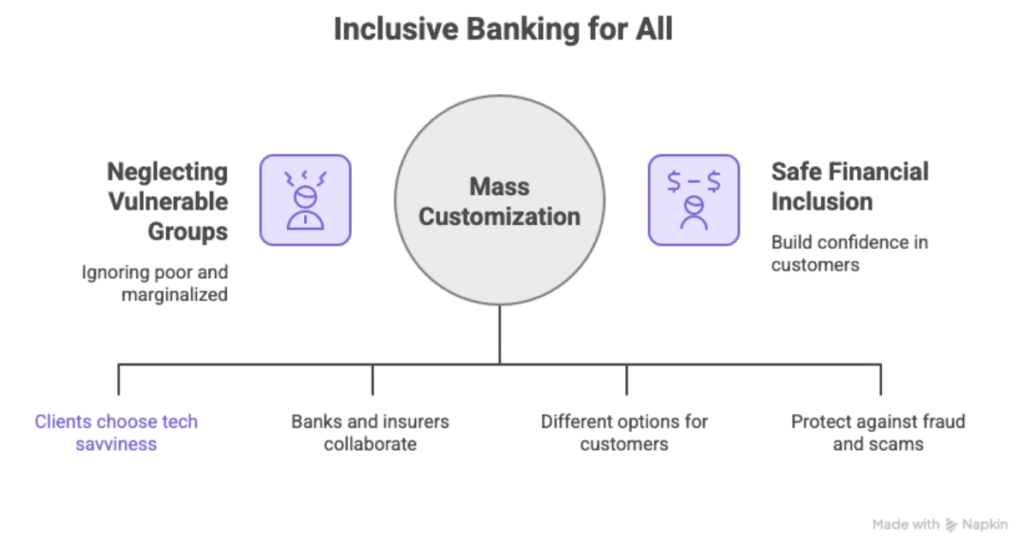
As financial technology evolves rapidly, a critical question emerges: Are we creating truly inclusive and safe banking experiences for all users, including those less comfortable with technology?  I recently attended IIT Bombay Research Park’s Fintech 2025 conference, where industry leaders celebrated technological advances while raising alarms about the rising wave of fraud in financial and insurance sectors. A prominent insight was that the industry predominantly caters to the tech-savvy middle class, often overlooking rural populations, the elderly, and differently tech-abled individuals.  Hands-off banking, designed to reduce costs, may unintentionally widen financial exclusion and risk for vulnerable groups. It is imperative for financial institutions to develop mass-customized platforms, enabling clients to select the right level of technology and human assistance tailored to their comfort and needs. Moreover, collective industry initiatives are essential to shield customers from sophisticated scams that education alone cannot prevent.  Banks should offer customizable service reviews, low-cost fraud insurance options, and ongoing guidance to build confidence and trust. By harnessing technology wisely, we can drive inclusive access while safeguarding users from fraudsters.  How is your organization addressing inclusive and secure financial services? Share your strategies below and let’s collaborate on solutions.    Recent Posts 01 Dec 2025 Beyond Tech-Savvy: Building Inclusive and Fraud-Resistant Banking for All 13 Nov 2025 Empowering India’s Solar Future: Bridging Industry and Academia
Empowering India’s Solar Future
Blogs

Empowering India’s Solar Future: Bridging Industry and Academia

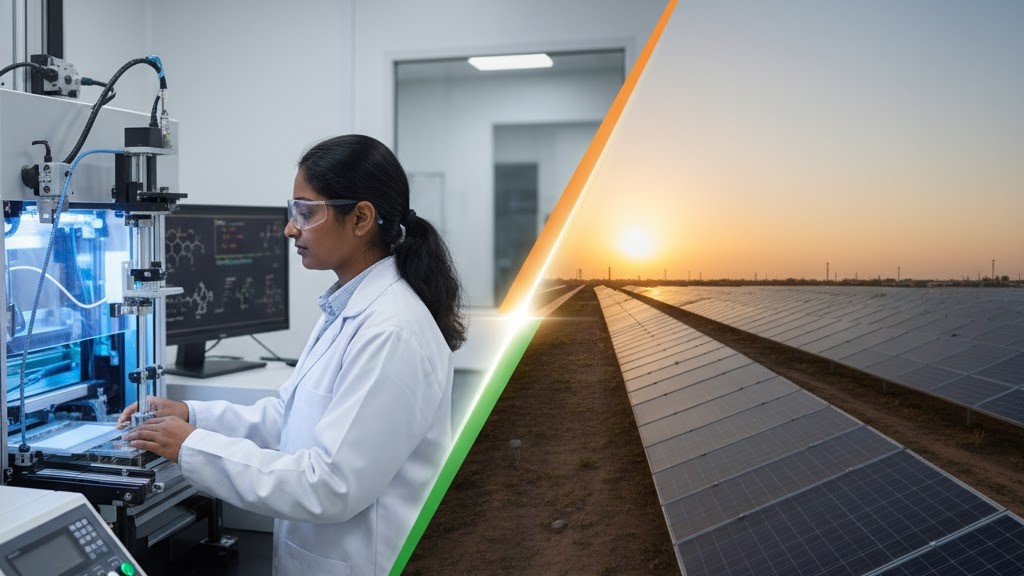
Empowering India’s Solar Future: Bridging Industry and Academia Last Saturday, I had the privilege to attend the Industry Day on “Empowering India’s Solar Future” organized by IIT Bombay’s Industrial Research and Consultancy Centre (IRCC). This event brought together leaders from some of India’s foremost solar companies alongside distinguished academicians, providing a dynamic forum to showcase IIT Bombay’s research capabilities and initiate potential collaborations with industry. India critically needs such initiatives. Despite rapid economic and technological growth, the Indian industry’s engagement with premier academic institutions often remains limited. As a result, the deep expertise and advanced infrastructure developed by our top research institutes are far from fully harnessed for national industrial advancement. My focus at the event was to understand the pressing gaps in India’s solar industry supply chain. Contrary to popular perception, sourcing materials—while complex—is no longer the main bottleneck in setting up high-tech solar cell manufacturing. Today, two issues dominate: Access to advanced machinery and quality control equipment required for manufacturing setup Availability of skilled and experienced talent to operationalize, fine-tune, and scale factory operations Generative AI: Consulting firms are increasingly focusing on Generative AI, both for client solutions and internal operations. PwC has partnered with Meta in India to build Generative AI solutions using Llama. Industry leaders at the event noted that a typical solar cell facility requires up to two years of post-commissioning just to reach acceptable and stable product quality. Such lengthy fine-tuning periods delay investment returns and, in a rapidly evolving technology landscape, can undermine project viability before commercial operations truly begin. To compete successfully under “Develop in India” and “Make in India” initiatives, Indian industry must adopt a broader value chain approach—not just as manufacturers, but as technology innovators. This means nurturing homegrown capabilities across R&D, advanced manufacturing, and skilled human capital. A particularly revealing insight: While Indian research organizations and start-ups are nearing commercialization of perovskite solar cell technology, a critical talent gap persists in the underlying printing technologies necessary for mass production. Currently, we remain dependent on international equipment suppliers, especially from China, to bridge this gap. The IRCC event was a timely reminder of the transformative power of robust industry-academia partnerships. For India to realize its vision of sustainable, inclusive development, technology must be at the center—and our premier institutes like IITs are ideally positioned to lead this journey. Key takeaway: Achieving global leadership in solar manufacturing will require coordinated action across the value chain, deeper collaboration between industry and academia, and targeted investment in both advanced technology and talent. Recent Posts 13 Nov 2025 Empowering India’s Solar Future: Bridging Industry and Academia

Scroll to Top